

Why use images?
Images used in online educstion have several uses. They are most frequently used to illustrate a point, but they are also used to create interest, act as headers or simply to break up large amounts of text.
Where can I find images to use in my content?
Anyone can contact the eLearningT eam MBChBeLearning@manchester.ac.uk and we can find images for you. If you want to use an image that you haven’t taken, you should provide details about who owns the image and how they should be credited, or where you obtained the image (a URL is best).

Stock Images
Many image sites have stock images which are available on a Creative Commons licence. We use these for patients, and to illustrate, or highlight points, adding to the narrative of learning, which aids memory.
The University’s asset management system (known as Chorus) is a source of curated, on-brand, relevant and up-to-date visual assets of The University of Manchester for any member of staff or external suppliers producing communications materials. To request access or to submit a query please complete this form.
Flickr is an image and video hosting service. Please use materials from the site solely in accordance with the Terms of Use
Pexels hosts a wide range of high quality, but casual photographs from a wide demographic, all photos and videos uploaded on Pexels are licensed under the Pexels license. This means you can use them for free for personal and commercial purposes without attribution.
Useful collections:
Unsplash offers a wide range of high quality photographs, all free to use with attribution, grants you an irrevocable, nonexclusive, worldwide copyright license to download, copy, modify, distribute, perform, and use images from Unsplash for free, including for commercial purposes, without permission from or attributing the photographer or Unsplash.
Euopeana hosts public domain photographs and illustrations
Images on Wikimedia Commons are offered under a range of Creative Commons licences.
Inclusive stock imagery (i.e. gender, race, disability)
The Gender Spectrum Collection hosted by Vice offers gender-inclusive images that have been made available to other media organisations through a Creative Commons licence (CC BY-NC-ND 4.0)
This collection of images shows presentations of dermatological conditions on black and brown skin, which can be used for educational purposes.
Disability Inclusion Stock Photography by Disability:IN is licensed under a Creative Commons Attribution-NoDerivatives 4.0 International License. Based on a work at www.disabilityin.org. This license allows others to reuse this stock photography for any purpose, including commercially; however, it cannot be shared with others in adapted form, and credit must be provided to Disability:IN.
The Disability Smart Image Bank offers images from Business Disability Forum (we are a member so staff can sign up and access this resource as a member, or partner). The collection includes hidden disabilities.
All the images are provided under a licence agreement. Restrictions on use are clearly explained within the licence agreement. You will be asked to tick a box to confirm you agree to the licence terms every time you download individual images or collections. You may provide downloaded images to a third party for example, a design or marketing agency that is creating assets for your organisation, but they must only use for your projects and under the terms of the licence agreement. They must also ensure Business Disability Forum is credited alongside the image when it is used.
Illustrations
Vecteezy is a collection of illustrations and graphics, some are free to use, with and without attribution
SMART offers illustrations of bodies, organs, bones, muscles etc.
licensed under CC BY 4.0. This license requires that re-users give credit to the creator. It allows re-users to distribute, remix, adapt, and build upon the material in any medium or format, even for commercial purposes.
The University of Edinburgh also has medical illustrations created by their students available for use via Creative Commons Licences: Flickr – Interactive Content (RESPe, Supercytes, Avatars, My Lungs My Life, STARs, HEARTe).
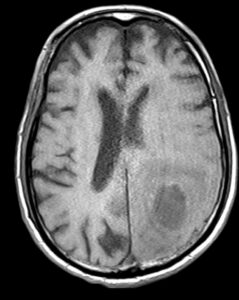
Clinical Images
Clinical images should be sourced by academic/clinical staff. They should adhere to the strict copyright policies put in place by the programme and relevant trust.
There are several online databases which provide clinical images for use in teaching. Ask colleagues on the programme for further advice and guidance.
ClinicalKey Student offers licenced images, available to use with full attribution using Harvard Referencing (log-in required), you may not copy, display, distribute, modify, publish, reproduce, store, transmit, post, translate or create other derivative works from all or any part of the Content in any medium to anyone, except as otherwise expressly permitted under Terms and Conditions, or any relevant license or subscription agreement or authorization by us. Elsevier permits that the Subscriber may copy, paste, and/or print up to maximum of ten percent(10%) of the Subscribed Product.
The use of Watermarked Images for the purpose of education is encouraged by DermNet. You may use Watermarked Images in accordance with the licensing requirements of Creative Commons Attribution-NonCommercial-NoDerivs 3.0 (New Zealand).
DermNet is the owner or licensee of copyright in the Images. Copyright in all Images remains with DermNet or its licensors.
Skin Deep s a project aiming to improve the diversity in paediatric skin images online. This is to improve education and therefore patient care. Free Open Access Medical Education.
Images on Europeana are public domain works, credit the author or creator.
When using Liver Atlas, cite the source alongside the following information: ‘The Liver Imaging Atlas: www.liveratlas.org. Copyright © 2010 University of Washington. All Rights Reserved.’
Radiopaedia offers radiology images (i.e. x-rays, scans), a wide range of clinical images, free to use with attribution
all content is provided under a modified Creative Commons Attribution-Non-commercial-Share Alike 3.0 Unported License.
Except where otherwise noted, content in the Wellcome Collection is licensed under a Creative Commons Attribution 4.0 International Licence.
The Wikimedia Commons hosts Creative Commons photographs, various licences, available under licenses specified on their description page.
Our eLearning colleagues at the University of Hull have created an annotated list of online repositories containing images which can be used without cost or restriction for educational purposes: Media repositories for e-learning.
Top Tips
If you are sending materials to eLearning for use online, include the URL (web address) so they can check the copyright for you and/or download a high resolution image/video.
How to cite images
Make sure to include a citation in the image caption. Some of the resources (e.g., Servier, Radiopaedia) give specific citations required for their licensing; if not, we usually include simply Author/Owner, Resource Name (e.g., J. Blogs, Pexels). Basically enough information for someone to find the resource but without filling the page with lots of text/URL.
How to request permission to use an image
Example Request:
Dear Vascular Society,
I am writing to request permission to use an image from your website within the online learning for students studying medicine at the University of Manchester. Please note that the content of the online learning site is also sold on to other universities and is therefore a commercial venture.
The image is at the top of the page about leg ulcers.
And it would be used as an exercise in which students will be asked to label the following features: Shallow wound; Irregular edge; Pink wound bed; Located in ‘gaiter’ area (around malleoli and lower calf); Other features of chronic venous insufficiency – varicose vein; Other feature of chronic venous insufficiency – thickened skin. We would attribute the copyright accordingly.
Please let me know if this would be acceptable to you, or if you have any questions.
All the best,